Table of Contents
- What Is White Glove Packing?
- White Glove Packing vs Standard Packing: Key Differences
- What Professional Packing Services Cost in 2026
- Packing Services for Fine Art and Antiques
- How to Prepare for White Glove Movers
- Insurance, Liability, and Inventory Documentation
- Conclusion: Is White Glove Packing Worth It?
- Frequently Asked Questions
Last Updated: October 4, 2026
What Is White Glove Packing?
White glove packing is a premium packing service in which trained specialists handle every item by hand, using professional-grade materials and custom crating to protect high-value belongings during a move or relocation.
The term comes from the careful, hands-on treatment given to each item. Nothing gets tossed in a box and taped shut. Instead, specialists wrap, cushion, and crate belongings so they arrive exactly as they left.
Most general moving companies treat packing as an add-on. A crew shows up, wraps what it can, and moves on.
White glove packing is defined by who does the work and how: trained specialists, professional-grade materials, and custom crating, not just extra tape and bubble wrap.
White Glove Packing vs Standard Packing: Key Differences
The core difference is specialization. Standard packing crews handle volume; white glove packing teams handle value.
Here is how the two compare:
| Factor | Standard Packing | White Glove Packing |
|---|---|---|
| Who packs | General movers | Trained packing specialists |
| Materials | Basic boxes, tape, paper | Professional-grade materials, padding and cushioning |
| Fragile items | Wrapped loosely | Custom crating, blanket wrapped |
| Documentation | Minimal or none | Inventory documentation per item |
| Insurance | Limited liability | Fully insured packing jobs |
| Best for | Low-value household goods | Fine furniture, artwork, specialty goods |
The gap widens with what you own. A household of basic furniture does not need white glove care. A home with original artwork, antique furniture, or a climate-sensitive collection does.
What most guides miss is that white glove packing is not just about protection. It is about liability. When a specialist packs and documents each item, responsibility for damage is clear.
What Professional Packing Services Cost in 2026
Professional packing services cost varies widely based on the size of your home, the fragility of your items, and the timeline you need. WePackYou does not publish flat rates because no two jobs are identical. Instead, we build each quote around the actual scope of work.
That said, “it depends” is not a useful answer on its own. Here is how the industry actually prices this work, so you can sanity-check any estimate you receive.
How Packing Is Priced
Most professional packers bill in one of three ways:
- Hourly labor plus materials. The most common model for residential jobs. You pay a crew rate per hour (typically higher than a standard moving crew rate because packers are specialists) plus the cost of boxes, paper, tape, and crating. A two-person packing crew usually works through a typical room in a few hours; a full home can take one to three days depending on density and fragility.
- Per-item or per-room flat rate. Common for fine art, antiques, and specialty collections. Each painting, sculpture, or piece of case furniture gets its own line item. This is the model that makes custom crating transparent, because you can see exactly what each crate costs.
- Percentage of declared value. Used almost exclusively for high-value collections and museum-grade transport. The packer prices the job as a percentage of the insured value of the goods, which aligns their incentive with protecting the pieces.
Factors That Move the Number
- Volume and item count: More rooms and more items mean more labor hours.
- Fragility level: Fine art, antiques, and specialty goods require custom crating and extra materials.
- Materials required: Custom-built wooden crates cost more than standard boxes.
- Timeline and scheduling: Evening and weekend packing often carries different rates than weekday work.
- Access and layout: Tight hallways, stairs, and oddly shaped items slow the process and add labor time.
- Insurance coverage: Fully insured packing jobs may carry a higher rate than basic coverage, because the packer is assuming more liability.
- Distance and destination: Interstate and long-distance jobs add transit, climate-controlled storage, and delivery-appointment costs that local jobs do not.
What a Quote Should Actually Show You
A trustworthy packing quote breaks the job into at least four lines: labor hours, materials, crating, and insurance. If you receive a single lump-sum number with no breakdown, ask for the itemization before you sign.
A common mistake is comparing a packing-only quote against a full moving quote. They cover different work. A moving company quote that includes packing often bundles it at a lower line-item price because the packing is rushed. Packing specialists charge for the time and materials that careful work actually requires.
Getting an Accurate Number
To get an accurate number, request a walkthrough. Photos and a phone call work for small jobs, but fine art and full-home moves need an in-person assessment. WePackYou provides free quotes.
Federal Motor Carrier Safety Administration guidance on moving estimates
There is no single “white glove packing price.” The number is built from labor hours, materials, crating, insurance, and access.
Packing Services for Fine Art and Antiques
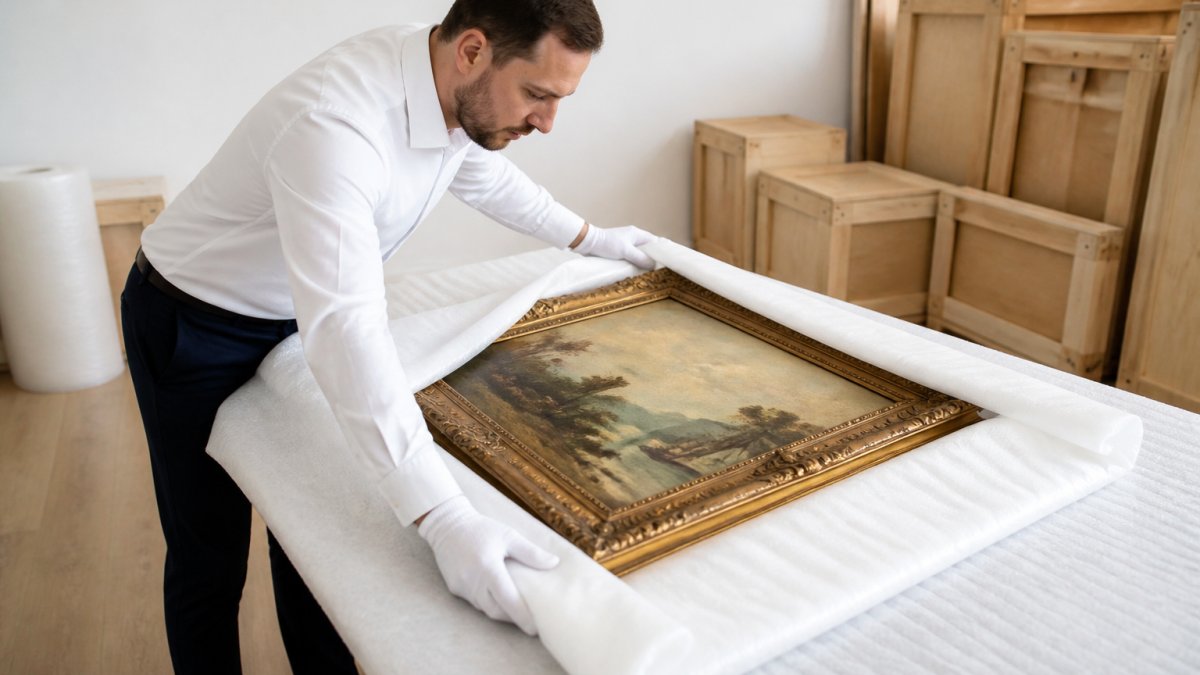
Packing services for fine art and antiques require methods built around each piece, not a one-size-fits-all box. Paintings, sculpture, and antique furniture each demand different handling, and a single wrong material can cause damage that shows up months later.
Paintings and Framed Works
Artwork protection starts with the surface. Glass and acrylic frames get taped in a grid pattern so shards stay contained if the frame cracks. The frame corners get foam padding. Then the whole piece goes into a custom-built crate lined with acid-free material.
A few specifics separate a real fine-art packer from a general mover:
- Glass taping. An X or grid pattern of low-tack tape across the glazing keeps broken glass from shifting into the artwork. Never tape the painted surface itself.
- Surface interleaving. Glassine or acid-free tissue goes between the frame and any protective board so the finish does not abrade in transit.
- Corner and edge protection. Foam or cardboard corner blocks absorb impact at the points most likely to hit a doorframe.
- Crate construction. A proper painting crate has a plywood shell, a foam or Ethafoam lining, and interior blocking that keeps the piece from shifting. The piece should not be able to move inside the crate when the crate is tilted.
- Orientation. Paintings travel face-up or face-in depending on size and frame type; the packer should tell you which and why.
Antiques and Case Furniture
Antiques add another layer of difficulty. Veneers, inlays, and original finishes react badly to moisture and pressure. Blanket wrapped padding protects the surface without leaving marks. Detachable parts like legs and handles get removed, labeled, and packed separately.
For case furniture, the sequence matters: remove drawers and pack them individually, pad the carcass, then wrap the whole piece in moving blankets secured with stretch wrap.
Custom Crating and Climate Considerations
Custom crating is the strongest protection available for oversized and fragile items. Each crate is built to the exact dimensions of the piece, with interior bracing that stops movement during transit.
Climate matters too. Wood, canvas, and paper expand and contract with humidity. For high-value shipping or interstate transfer, climate-controlled storage and transport protect pieces during the days between packing and delivery. If your collection includes pieces sensitive to temperature swings, ask about climate-controlled options before you book.
Inventory and Documentation for High-Value Pieces
This is the part most guides skip, and it is the part that protects you if something goes wrong. Every high-value piece should be photographed, described in writing, and assigned a unique inventory number before it is packed.
Pair that inventory with a current appraisal. Appraisals support insurance claims, and most full-value protection policies require proof of value, not just proof of ownership. If you have never had your collection appraised, do it before the move, not after. Provenance documents, purchase receipts, and condition reports belong in the same file.
Do not let anyone wrap fine art in standard bubble wrap alone. Plastic can trap moisture against a canvas or gilded frame, and the damage often does not appear until weeks after delivery.
Fine art and antiques are not packed, they are engineered. The materials (acid-free, glassine, Ethafoam), the crate construction, and the inventory documentation are what make a claim defensible if the worst happens.
How to Prepare for White Glove Movers
Preparing for white glove movers takes less work than preparing for a standard move, but a few steps make the process faster and safer.
Start with a walkthrough. Point out every high-value item, including pieces in closets or storage. A specialist cannot protect what they do not know about.
Then handle the basics:
- Clear walkways, hallways, and doorways of furniture and clutter
- Remove wall hangings you can safely take down yourself
- Set aside items you will move personally, such as jewelry and documents
- Note any tight turns, narrow stairwells, or low doorways
- Confirm parking and elevator access for the crew
- Gather any appraisal or provenance documents for high-value pieces
The last item matters more than people expect. Appraisals support insurance claims if something goes wrong.
For seniors downsizing, the process can feel overwhelming.
Insurance, Liability, and Inventory Documentation
Insurance and inventory documentation are what separate a protected move from a gamble. Standard mover liability often pays by weight, not by value, which means a damaged antique might be compensated at a fraction of what it is worth.
Full-value protection is different. It covers the actual value of your items, but only if you can prove that value. That is why inventory documentation matters. Every item gets photographed, described, and logged before it is packed. If a claim is needed, the record exists.
Ask these questions before you sign anything:
- Does the coverage pay replacement value or weight-based liability?
- What is excluded from coverage?
- How are high-value items documented?
- What is the deadline for filing a claim?
U.S. Department of Transportation consumer protection information for moving
Conclusion: Is White Glove Packing Worth It?
White glove packing is worth it when the value of what you own outweighs the cost of protecting it. For a household of basic furniture, standard packing is fine.
The real question is not whether you can afford white glove packing. It is whether you can afford what happens without it. A single damaged painting or shattered heirloom often costs more than the packing itself.
WePackYou specializes exclusively in professional packing, with trained specialists, professional-grade materials, and custom-built wooden crating for oversized and fragile items. If you are planning a move in the DC Metro area, get a free quote and find out exactly what your belongings need.
Frequently Asked Questions
Is it worth paying for white glove packing services?
White glove packing is worth it when your belongings include fragile, oversized, or high-value items that standard packing cannot protect. Trained specialists use professional-grade materials like custom crating, blanket wrapping, and padding and cushioning to prevent damage. For fine furniture, artwork, antiques, or specialty goods, the cost of replacement and the stress of a claim usually outweigh the service fee. If you are moving items with sentimental or monetary value that would be difficult to replace, white glove packing provides asset protection that standard services do not offer.
How much does white glove packing cost compared to standard services?
White glove packing costs more than standard packing because it includes trained specialists, premium materials, custom crating, and additional liability coverage. Pricing depends on the volume of items, the complexity of the packing, and any specialty requirements like climate-controlled storage or unpacking services. Request a free quote so the team can assess your specific items and timeline. Comparing a detailed white glove estimate against a standard quote helps you see the full value, not just the base number.
What items typically require white glove packing?
Items that require white glove packing include fine furniture, original artwork, antiques, chandeliers, mirrors, pianos, sculptures, and delicate items such as porcelain or crystal. Electronics with fragile screens, large TVs, and specialty goods that need climate-controlled storage also benefit. If an item is irreplaceable, has intricate detailing, or requires specialized equipment to move safely, it falls into the white glove category. Professional movers assess each piece and recommend custom crating or blanket wrapping based on its material, weight, and fragility.
Should I hire white glove packers for a military PCS move?
Hiring white glove packers for a military PCS move can reduce stress and protect your household goods during a tight timeline. Military families often receive orders with only a few weeks’ notice, and professional packing services can work around your schedule, including evenings and weekends. White glove packing also provides inventory documentation and secure transportation, which helps if you need to file a claim later. WePackYou works with military families in the DC Metro area and understands the urgency of PCS orders, offering reliable, insured packing that minimizes disruption.