Last Updated: October 25, 2026
Quick Summary
Professional packing insurance is worth it when your belongings are worth more than basic carrier liability pays, since full value protection costs roughly 1% of declared value. For ordinary, replaceable furniture the math is thin, but for fine art, antiques, or high-value homes the coverage justifies the cost.
- Basic carrier liability is free but pays a set amount per pound, per article, often 60 cents per pound.
- Full value protection typically costs around 1% of declared value, about $1,000 on a $100,000 household.
- Many policies exclude or sharply limit damage to cartons you packed yourself.
- Professional packing runs $280 to $2,200 for a typical home, with median packer rates of $60 to $80 per hour.
- Get a written appraisal and rider for items appraised above a few thousand dollars.
Table of Contents
- What Professional Packing Insurance Actually Covers
- Released Value Protection vs. Full Value Protection
- Items Packed by Owner: Moving Insurance and the Claims Gap
- Moving Insurance for Valuables: Art, Antiques, and High-Value Pieces
- The Break-Even Math: Packing Fees vs. Coverage Costs
- Moving Insurance Claim Documentation: What to Gather Before Packing Day
- Get a Packing Quote and Verify Your Coverage Before You Book
- Frequently Asked Questions
What Professional Packing Insurance Actually Covers
Packing insurance is not a single product. It is the combination of two things: the limited liability a licensed moving company carries by law, and any additional valuation coverage you buy to raise that ceiling. Most movers provide basic coverage at no charge, but it rarely pays enough to replace what you own.
Published cost estimates put moving insurance at $215 to $2,500, depending on the coverage type and the total value of your belongings (Angi moving insurance cost data). That range is wide because the products are genuinely different. One is a legal minimum. The other is a purchased guarantee.
Basic Carrier Liability vs. Purchased Coverage
Basic carrier liability is the free floor. It typically pays a set amount per pound, per item, which means a 40-pound box of dishes and a 40-pound box of heirlooms settle at the same rate.
Purchased coverage works differently. According to ConsumerAffairs guidance on moving valuation, basic coverage is free while full-value protection costs roughly 1% of your belongings’ value. On a $100,000 household, that is about $1,000.
The distinction matters because packing quality directly affects which claims get paid. The Federal Motor Carrier Safety Administration identifies packing your own boxes as a circumstance that can limit mover liability.
Released Value Protection vs. Full Value Protection
The terms movers use for coverage are not interchangeable, and treating them as synonyms is how households end up underinsured. Under federal rules for interstate moves, a carrier must offer two valuation options: released value protection and full value protection. Neither is insurance in the legal sense, they are liability regimes that cap what the carrier owes.
Released value protection is the default and the cheaper option. It pays a fixed amount per pound, per article, commonly 60 cents per pound under the carrier’s tariff. A 10-pound box of dishes and a 10-pound box of heirlooms both settle at the same rate.
Full value protection is the higher tier. The mover agrees to repair, replace, or reimburse lost or damaged items up to the declared value of the shipment, subject to a deductible and specific exclusions. The cost is typically a percentage of declared value, often around 1%, though carriers set their own rates. On a $100,000 household, that is roughly $1,000.
| Coverage Type | Typical Cost | How Claims Pay | Best For |
|---|---|---|---|
| Basic carrier liability (released value) | Included free or low cost | Set amount per pound, per article | Low-value, replaceable goods |
| Full value protection | ~1% of declared value, plus deductible | Repair, replace, or cash out up to declared value | High-value homes, fine art, antiques |
| Third-party insurance | Separate premium | Policy terms govern; may coordinate with carrier liability | Households wanting broader perils or higher limits |
Two distinctions matter. First, full value protection is not the same as a homeowner’s or renter’s policy rider, those are actual insurance products with their own deductibles and exclusions, and they may or may not coordinate with carrier liability. Second, deductibles vary: some full value options carry a $0 deductible, while others apply a deductible per claim or per shipment. Read the tariff, not the sales sheet.
Do not assume “full value” means “replacement cost with no questions.” Exclusions for owner-packed cartons, improperly packed items, and high-value articles that were not declared can reduce or void a claim.
Before you choose, ask the carrier for the written tariff language on valuation, the deductible amount, and the exclusions list. If you are moving interstate, the [Federal Motor Carrier Safety Administration | fmcsa.dot.gov] publishes guidance on your rights and the carrier’s obligations under 49 CFR Part 375.
Items Packed by Owner: Moving Insurance and the Claims Gap
The single biggest claims gap in any move is the box you packed yourself. Items packed by owner moving insurance questions come up constantly, and the answer is uncomfortable: many policies exclude or sharply limit damage to owner-packed cartons.
That is not the mover being difficult. It is a documented liability boundary. When a professional packer seals a box, the mover owns the packing standard. When you seal it, you own it.
Watch out: a single self-packed box of fragile glassware can wipe out the savings from a whole weekend of DIY packing, because the claim may be denied outright.
The practical fix is partial packing. Let professionals handle fragile items, artwork, and anything you would struggle to replace, and pack the books and linens yourself. Partial packing services can be a practical fix for this scenario.
Moving Insurance for Valuables: Art, Antiques, and High-Value Pieces
Fine art and antiques sit outside the logic of standard valuation. A per-pound settlement on a framed oil painting is meaningless, and most carrier policies cap high-value items unless you schedule them separately.
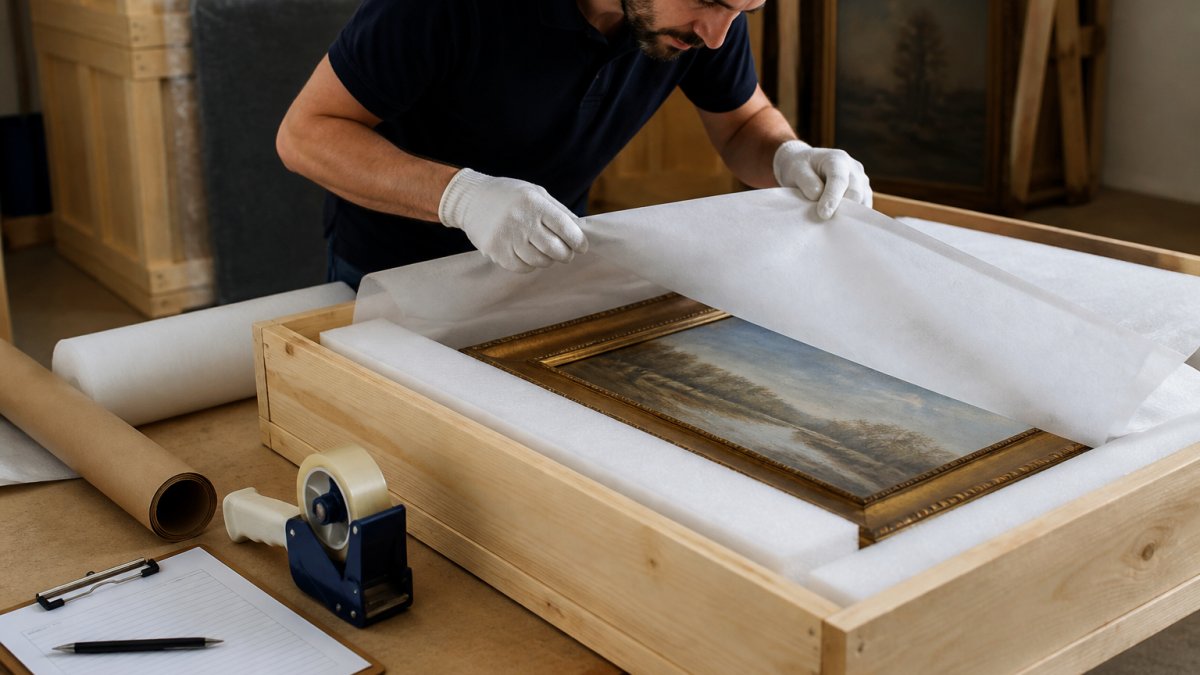
Professional crating changes the insurance conversation. A custom-built wooden crate with proper internal bracing reduces the chance of damage and gives the insurer a documented standard of care. Owners of high-value pieces should read our guide to the benefits of professional crating for antique furniture before requesting coverage quotes.
For anything appraised above a few thousand dollars, get a written appraisal and a rider. Do not assume the base policy reaches it.
The Break-Even Math: Packing Fees vs. Coverage Costs
The decision is arithmetic, not philosophy. Compare three numbers: what professional packing costs, what full value protection costs, and what you can afford to lose.
Professional packing runs $280 to $2,200 for a typical home, with nationwide median packer rates reported at $60 to $80 per hour (Smith Dray packing cost report). That same reporting notes median rates rose 6.3% year over year. Coverage at roughly 1% of declared value adds another line. On a $60,000 household, that is about $600.
Scenario 1: DIY packing plus basic liability
- Packing materials: $150-$400 for boxes, tape, bubble wrap, and paper.
- Your time: a weekend or more, unpaid.
- Coverage: released value at roughly 60 cents per pound.
- Exposure: a single box of fragile glassware or a high-value electronics item can exceed the per-pound payout by hundreds or thousands of dollars. If you packed the box, the carrier may deny the claim outright.
Best for: low-value, sturdy goods where replacement cost is manageable.
Scenario 2: Professional packing plus full value protection
- Packing labor costs vary depending on home size and fragility.
- Coverage: ~1% of declared value, so about $600 on a $60,000 household, plus any deductible.
- Exposure: lowest, and the claims process is cleaner because the mover owns the packing standard.
- Trade-off: highest upfront cost, and you still need to read exclusions for undeclared high-value items.
Best for: households with fine art, antiques, or a lifetime of belongings being downsized.
Scenario 3: Hybrid, partial packing plus full value protection
- Let professionals pack fragile items, artwork, and anything you would struggle to replace.
- Pack books, linens, and sturdy goods yourself.
- Coverage: full value protection still applies, but owner-packed cartons may be excluded or limited.
- Cost: middle of the range, and it closes the gap on the items most likely to break.
Best for: budget-conscious households that want protection where it matters most.
Run the comparison honestly: if the replacement value of your fragile and high-value goods exceeds the cost of professional packing plus coverage by a wide margin, the hybrid or full-service option usually wins. If your belongings are ordinary and replaceable, basic liability plus careful DIY packing may be the rational choice.
Our professional packers handle residential and commercial projects across the region. Ask for a written quote that separates packing labor, materials, and coverage so you can compare line by line.
Moving Insurance Claim Documentation: What to Gather Before Packing Day
Claims are won or lost on paperwork assembled before the truck arrives. Moving insurance claim documentation is not something to build after a box is crushed.
Build this file first:
- A room-by-room inventory list with photos of each item before packing
- Serial numbers and receipts for electronics and appliances
- A written appraisal for art, antiques, and jewelry
- The signed bill of lading and your declared value in writing
- The policy’s exclusions page, read and highlighted
- Photos of the packed cartons and their condition at pickup
- The mover’s full legal name and USDOT number
Then verify the policy before booking. Ask three questions in writing: what is excluded, what is my deductible, and who packed the box. If the answer to the last one is “you did,” expect a fight. Our packing services FAQs cover how liability and purchased coverage interact in practice.
Get a Packing Quote and Verify Your Coverage Before You Book
Yes, professional packing insurance is worth it when the value of what you own exceeds what basic liability will pay. For a household of ordinary furniture, the math is thin. For fine art, antiques, a senior downsizing a lifetime of belongings, or an office with equipment on a deadline, the coverage is the reason to hire professionals at all.
The mistake is buying coverage without fixing the packing. A policy that excludes owner-packed cartons protects nothing you packed yourself.
WePackYou specializes exclusively in professional packing, with trained specialists, professional-grade materials, and custom-built wooden crating for oversized and fragile items. Every packing job is fully insured, and we work around your schedule, including evenings and weekends.
Get started with WePackYou and request your free packing quote so you can confirm your coverage before you book.
Frequently Asked Questions
Does moving insurance cover items packed by the owner?
Often it does not, or it covers them at a reduced level. The Federal Motor Carrier Safety Administration identifies packing your own boxes as a circumstance that can affect mover liability, so items packed by owner moving insurance terms and exclusions matter. Before you sign, ask the carrier in writing whether self-packed boxes are covered, what the per-item limit is, and whether you must note the contents on the inventory list. If you pack high-value pieces yourself, expect the claim to be harder to support.
What is the difference between released value protection and full value protection?
Released value protection is the basic, no-extra-cost option and typically pays a limited amount per pound per item, which rarely covers replacement value. Full value protection costs more, commonly around 1% of your belongings’ value according to ConsumerAffairs, and repairs, replaces, or reimburses items up to the declared value. The trade-off is real: released value is cheap but thin, while full value protection costs money and may carry a deductible. Read the valuation section of your contract before choosing.
Does homeowners insurance cover belongings during a move?
Sometimes, but the gap is bigger than most people expect. Many homeowners policies extend some coverage to property in transit, yet limits, deductibles, and exclusions vary by policy, and claims against a carrier may interact with your own coverage. Call your insurer before packing day and ask three things: whether items in transit are covered, what the limit is, and whether filing a moving claim affects your policy. Get the answer in writing so you can compare it against the carrier’s valuation option.
How do I verify a policy and file a claim if something breaks?
Ask for the carrier’s valuation option in writing before booking, including the deductible, per-item limits, and exclusions. During packing, photograph each high-value item and keep a dated inventory list with descriptions and estimated replacement value. After delivery, note damage on the delivery receipt before signing, keep the damaged item and all packing materials, and submit moving insurance claim documentation: photos, the inventory list, receipts or appraisals, and the delivery paperwork. Report the claim promptly, since carriers set filing deadlines.
